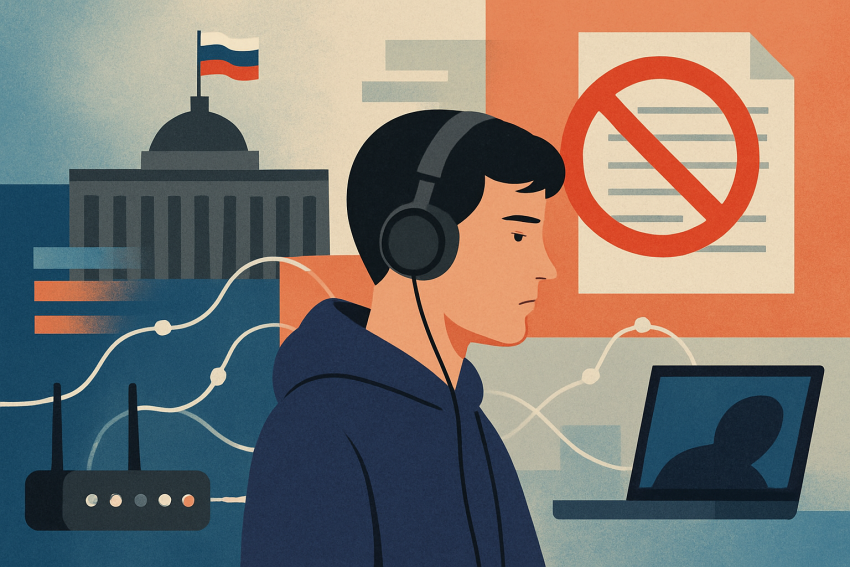
teenager charged for banned song
What is reported and what is confirmed
TechRadar reported on August 18, 2026, that a teenager in Russia has been charged after listening to a banned song while using a virtual private network (VPN). That single report is the only source in the provided cluster; it establishes the central claim but provides few specifics. For teenager charged for banned song, the key point is what the available source material confirms and what remains uncertain.
- Confirmed: TechRadar published a story saying a teenager was charged in Russia and that the alleged conduct involved listening to a banned song using a VPN.
- Unconfirmed: the identity and age of the teenager, the title of the song, the precise legal charge or statute invoked, whether authorities released an official statement, and whether the account has independent corroboration.
teenager charged for banned song — how important is this case?
This report raises immediate questions about enforcement and digital access, but its overall significance depends on several gaps in verification. If accurate and typical of a broader enforcement pattern, the case could signal stricter policing of online consumption and VPN use. If isolated or mischaracterized, its wider importance is limited.
Why the report matters if true
- It would illustrate that authorities are monitoring not only content but also methods (like VPNs) used to access content.
- It could have chilling effects on young people and on ordinary VPN users who rely on such tools for privacy or access.
- It may indicate an expansion of law enforcement focus into private consumption rather than only distribution.
Why caution is needed
- The report lacks details that determine legal severity: we do not know whether the charge is criminal, administrative, or a different procedure.
- There is no cited official statement in the provided material to confirm the prosecutor or police explanation.
- Singular reporting without independent verification can overstate an isolated incident or misinterpret context.
What the report does not show
- It does not show motive, prior warnings, or whether the teenager was targeted for other reasons.
- It does not show how authorities determined the teenager had used a VPN to listen to the content.
- It does not establish precedent — one reported case does not prove a sustained policy or enforcement trend.
verification steps and what to watch for next
- Look for an official statement from Russian law-enforcement or judicial authorities confirming the charge and the legal basis.
- Seek independent reporting from additional news outlets or local journalists that provide names, legal documents, or court filings.
- Check for details about the song (title, status of being officially banned) and whether the ban is domestic (a Russian prohibition) or related to other legal categories.
- Watch for responses from civil-rights or digital-rights groups that may document similar cases or provide legal analysis.
Short-term indicators that increase the report's significance
- Publication of court records or an indictment listing specific charges and statutes.
- Multiple reputable outlets corroborating the basic facts and adding verifiable details.
- Evidence that the case is part of a pattern (similar cases reported elsewhere).
Short-term indicators that reduce the report's weight
- A retraction or correction by the original reporter.
- An official statement contradicting the reported facts.
- Lack of follow-up reporting beyond the initial story.
practical implications for readers
- For VPN users: the report, as presented, suggests caution when drawing conclusions; it does not demonstrate a new legal prohibition on VPN use generally.
- For digital-rights observers: this single report is worth monitoring but not yet a confirmed signal of broad policy change.
- For journalists and researchers: obtaining primary documents (charges, court filings) is necessary before treating the case as evidence of a wider trend.
Sources and limitations
The only source in the provided cluster is TechRadar, which reported the incident. Because the cluster contains no primary legal documents or multiple independent reports, the core facts remain thinly sourced. This article highlights what is reported and prioritizes the outstanding questions that must be answered to assess the true significance of the case.